Day four of a major trade show. The exhibit hall was still packed. Conversations everywhere. And Dr. Rhue noticed something that stuck with her: not a single OD she talked to had bought anything yet.
No demos booked. No tools adopted. Four days in, surrounded by solutions to problems they'd been complaining about for months, and the default answer was still "maybe."
That pattern repeats at every stop on the conference circuit. Vision Expo, SECO, PECAA, Vision Source Exchange, Heart of America. Different cities and different crowds, but the same result. ODs walk in curious. They leave inspired. Then Monday morning happens, and the brochure from booth 347 ends up under a stack of charts.
"Is It a No, or an I Don't Know?"
Dr. Rhue wrote about a related dynamic in her Invision Magazine article on non-covered vision plans.¹ When a patient declines a recommendation, they usually don't mean "no." They mean "I don't understand what I'm getting." The exam room version of this problem has a direct parallel on the trade show floor.
When an OD says "not yet" at a booth, the real objection is rarely about the product. It sounds more like "I can't picture my staff using this" or "I tried something similar three years ago, and it gathered dust." Neither of those is a rejection. Both are uncertain. And uncertainty, left alone, defaults to inaction every single time.
The difference between a patient saying "I don't know" and an OD saying "not yet" at a conference is almost nothing. In both cases, the person standing in front of a good option needs someone to help them see what the first step looks like.
The Math on Conference Inaction
Registration, flights, hotels, and days away from patients. A single trade show costs most practices $3,000 to $5,000, including lost production.³ SECO alone pulls thousands of ODs out of their offices for a full week. Add in the CE credits that could have been earned online for a fraction of the cost, and the real question becomes: what did this trip produce that couldn't have happened from your office?
That investment makes sense if something changes when you get back. If the trip produces one new protocol, one staff training initiative, or one overdue vendor decision, the ROI is obvious. But if the brochures go in a drawer and the follow-up emails go unanswered, that $4,000 bought you a few days of inspiration and a lanyard.
We've watched this cycle for years. The energy at conferences is real. People are engaged, asking questions, genuinely excited about what they see. The problem starts on the flight home, when the excitement meets 22 patients on Monday's schedule and a staff that wasn't at the show.
There's a compounding effect that makes this worse than it sounds. Every conference you attend without implementing something lowers the probability you'll implement something from the next one. Your brain learns that conference decisions don't stick. The pattern becomes: attend, get inspired, come home, get busy, repeat. After two or three cycles of this, the trade show itself starts feeling like a break from work rather than a catalyst for change. That's an expensive vacation.
The practices that break this cycle tend to share one characteristic. They don't try to bring back five ideas. They bring one back and treat it like a project with a deadline and an owner, rather than an aspiration they'll get to eventually.
Pick One Thing Before You Go
Whatever conference is next on your calendar, try something different this time.
Before you leave for the airport, decide what problem you're solving this quarter. Not on the flight home. Not in a follow-up email three weeks later. Before you walk onto the expo floor.
Is it capture rate? Your annual supply conversion? A technology you've been putting off evaluating? Write the problem down. Then evaluate everything at the show through that single lens. Skip the booths that don't address it. Spend more time at the ones that do. Book the demo before you leave the floor, because the odds of booking it from your office next Tuesday drop to almost zero.
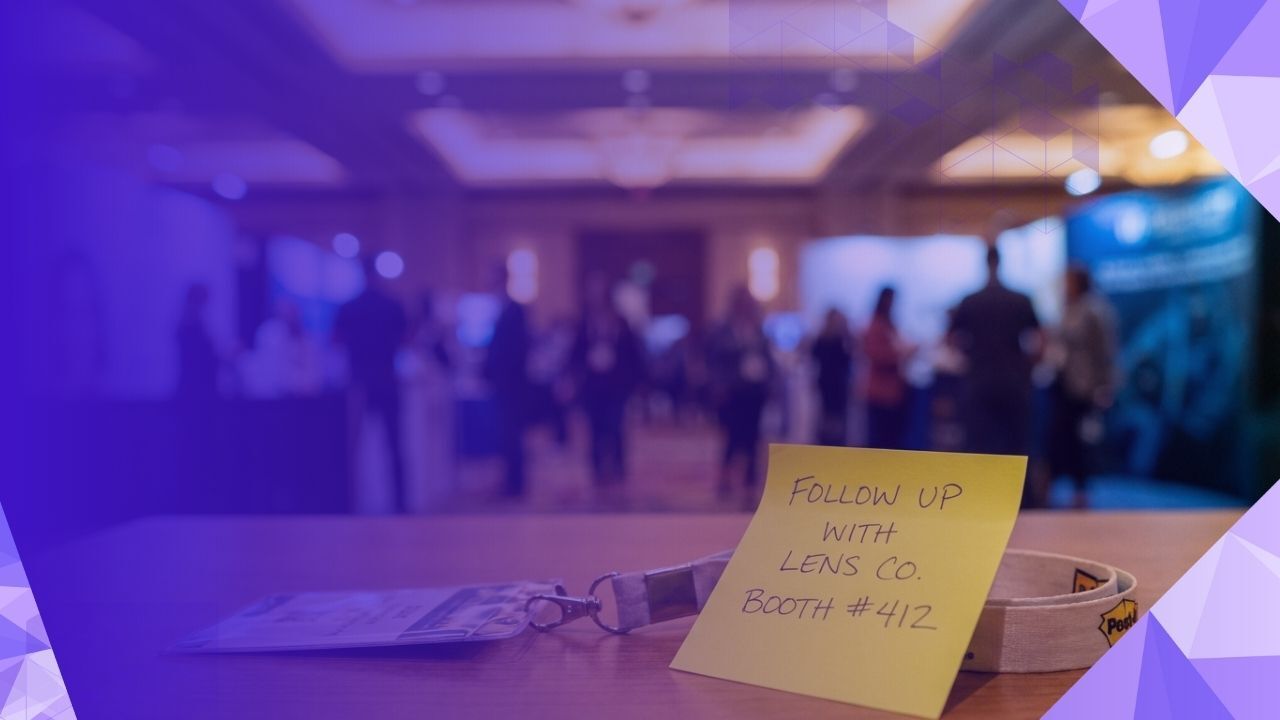
Try a version of this: write your one problem on a Post-it and stick it to your badge. Use it as a filter for every conversation on the floor. If the vendor in front of you isn't addressing that problem, politely move on. If they are, go deeper. Ask what implementation looks like in the first 30 days. Ask for a practice reference you can call next week. Get specific enough that you leave the booth with a next step, not a brochure.
Where the RICE Method Fits
The RICE framework provides structure for this process when you're standing in an exhibit hall with 200 vendors competing for your attention.
Research the products before you arrive. Read their websites. Watch the demo videos. If you show up with informed questions instead of blank curiosity, you'll get better answers and waste less time on vendors that don't fit your problem.
Innovate means asking one question at every booth: "Does this change my workflow, or just add to it?" A tool that requires your staff to learn an entirely new process can carry an adoption cost that outweighs the benefit. The best innovations slot into what your team already does and remove steps rather than adding them. If a vendor can't explain how their product fits into your existing workflow in two minutes, the integration is probably harder than they're letting on. Press on this. The number one reason practice technology purchases fail isn't the technology. It's the change management around it.
Comfort applies to your team as well as your patients. How comfortable will your staff be with this change? If the honest answer is "not at all," you need an onboarding plan before a purchase order. Ask the vendor what their implementation support looks like. Ask for references from practices your size — not a 40-location group, but a practice that looks like yours. If they can't provide either, that tells you something about where their customer base actually is.
Educate cuts both ways. Does this tool help educate your patients? And does the vendor educate your staff on implementation, or do they hand you a login and disappear? The vendors worth your time will have a 30-day onboarding plan they can walk you through on the spot.
The Staff Problem Nobody Talks About
Here's the part of conference follow-through that rarely makes it into the recap email: your staff wasn't there. They didn't see the demo. They didn't hear the pitch. They don't have the context you have, and they're the ones who will actually use whatever you bring back.
The practices that successfully implement conference decisions almost always do the same thing in the first week home. They block 15 minutes at the next staff meeting to explain what they saw, why they picked it, and what it means for the team's daily workflow. Not a presentation. A conversation. "Here's what I saw, here's why I think it solves the problem we've been having with X, and here's what the first two weeks will look like."
Without that conversation, the new tool or protocol lands on your team without warning. They didn't choose it. They don't understand why it matters. And the path of least resistance is to keep doing what they were doing before you left for the conference. That resistance compounds quietly until the subscription lapses or the new protocol just stops being mentioned.
If the vendor you talked to at the show can't give you a one-page staff overview or a short video your team can watch before implementation starts, that's a gap worth noting. The best vendors know that the OD is rarely the adoption bottleneck. The front desk is.
Download the RICE sheet and bring it with you. Write your one thing at the top before you leave for the airport.
What Happens When You Actually Pick One
We're not asking you to overhaul your practice after every conference. We're asking you to commit to one change from your last show. Put it on your calendar for a specific date this month and tell someone on your team what you're doing, because accountability beats good intentions every time.
If you saw a technology demo that could save your front desk 20 minutes a day, but you haven't booked the follow-up call, book it today. Not next week. The research on habit formation is clear: the longer the delay between intention and action, the less likely the action is to happen.²
Here's a useful gut check: if you can't name the one thing you brought back from the last conference you attended, the conference didn't work. That doesn't mean the event was bad. It means the follow-through system was missing. The conference gave you options. What it couldn't give you was a commitment.
The practices growing their contact lens revenue right now aren't doing it because they attend more conferences than everyone else. They're doing it because they pick one thing at each one and actually see it through. That's the whole framework. No complexity required.
The contact lens operating system works when you work it. But working it starts with picking one thing and giving it a date.
¹ Rhue, B. (2026). "Is It Really a 'No' — Or an 'I Don't Know'?" Invision Magazine. https://invisionmag.com/is-it-really-a-no-or-an-i-dont-know/
² Clear, J. (2018). Atomic Habits. Penguin Random House. The "implementation intention" research shows that people who specify when and where they will perform a new behavior are significantly more likely to follow through.
³ Estimated based on typical conference costs for independent ODs: registration ($500-800), airfare ($300-600), hotel ($600-1,200 for 3-4 nights), meals, and 3-5 days of lost production at $1,500-2,500/day revenue.
