
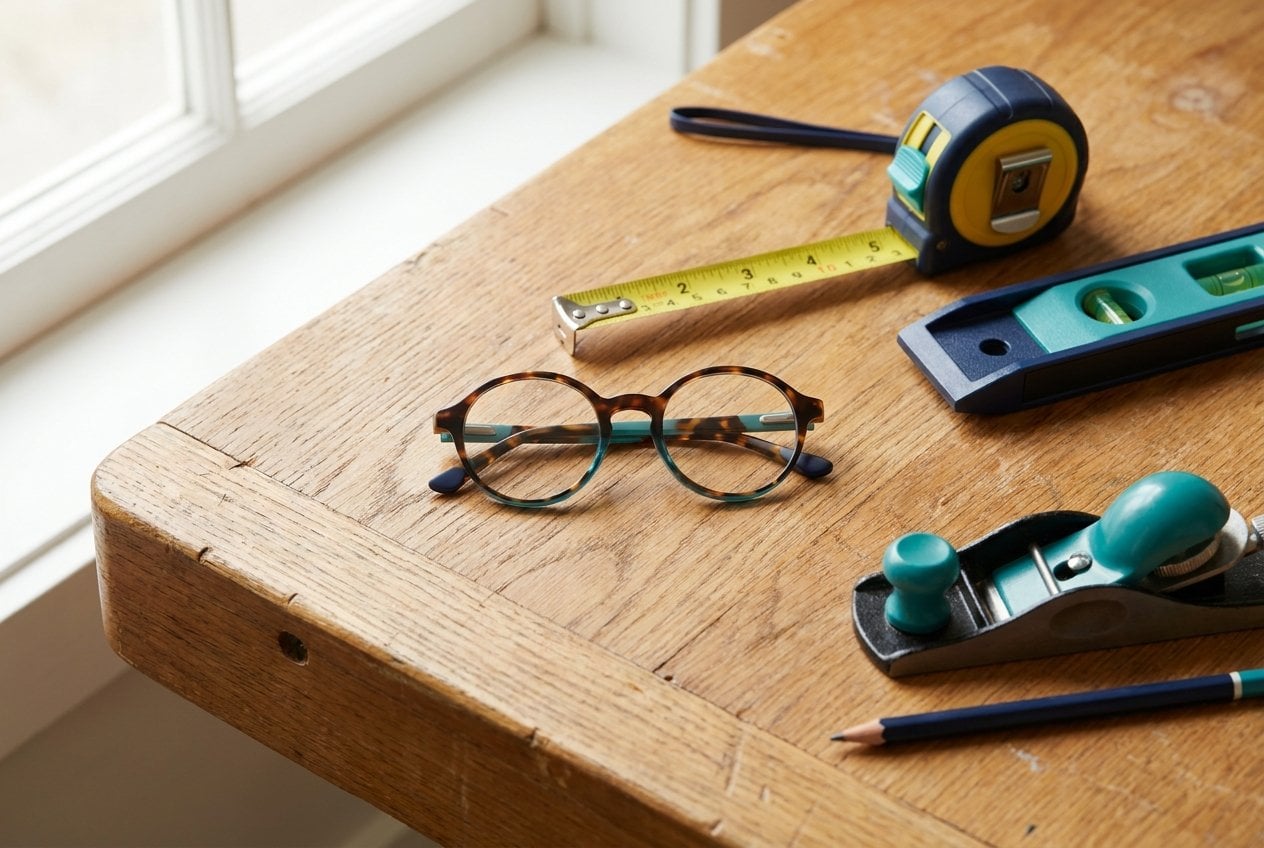
You don’t have to gut the house. You just have to pick up the tools already on your shelf.
By Dr. Brianna Rhue, OD, FAAO, FSLS, Co-Founder of Dr. Contact Lens
I started thinking about myopia when I was pregnant with my first son. I’m a minus five and a half, my husband is a minus six and a half, and one night I did what every nervous parent does: I Googled whether I could keep my kids from ending up like me. What I found was that we’re decades behind the rest of the world. That one search changed my practice.
Here’s what I want to hand you, owner to owner: you don’t have to gut your practice to build a myopia program. You already own the house. It’s a renovation, done one room at a time, with tools mostly already on your shelf.
The first room is your own head. Myopia isn’t just a refractive error anymore. In October 2024, the National Academies classified it as a disease, a progressive one that lengthens the eye and raises the lifetime risk of the things none of us want to write in a chart. It’s not snake oil anymore. We have FDA-approved treatments and, now, a national consensus behind us.
The second room is your measuring tape. We’re all excellent at measuring diopters, but the number that predicts a child’s future is millimeters: axial length. Keep the eye under 26 millimeters, keep the myopia from running away, and you’ve changed that child’s odds. If you’re only refracting, you’re seeing half the story.
The third renovation is free. Even if you never fit a myopia-control lens, you can talk about screen time, outdoor time, and bedtime with every family that walks in. Getting a child outside forty to eighty minutes a day measurably slows progression. That’s a conversation, not a capital expense, and it’s every optometrist’s job.
When you’re ready for the power tools, there are four: low-dose atropine, soft multifocal or dual-focus contact lenses, orthokeratology, and now myopia-control spectacle lenses. None are as scary as the fear around them. A myopia-control contact lens fits about like a single-vision lens. The clinical work is the easy part. The hard part, honestly, is learning to present your fees.
A myopia program pays for itself. It earns two to five times the margin of a year of single-vision lenses, and it opens a relationship that runs from a child’s first exam through contacts, refractive surgery, and the rest of their life. A child you start in myopia control becomes a contact lens patient for decades, and whether those reorders stay in your practice or drift online is a choice worth making on purpose. Your refraction is the top of the funnel, and myopia is one of the highest-value things that funnel can feed. We have the tools. We just have to be the ones to own it.
Two things I’ve learned in my own chair. Don’t decide for the parent; it’s not our place to call a treatment too expensive, any more than an orthodontist would. And don’t dabble. Myopia is like a weed: ignore it and it grows anyway; tend it and it grows for you.
So here’s my challenge, the same one I give myself: be one percent better tomorrow than you are today. Think about the six-year-old you’ll see this week. In thirty years she’ll be thirty-six; in thirty more, sixty-six. We’re two generations of optometrists who get to change her whole story, this week, from an ordinary chair, with tools we already have. That’s the renovation worth starting.
At Dr. Contact Lens, we help independent practices keep the contact lens relationship, and the reorders, in the practice. If you’re building a myopia program, that’s the part worth protecting. See how it works.
